How to Choose a Custom Masonic Ring: Symbols, Metals, Fit and Personalisation
6 Oct 2026 · Burtay Eray Dinçel
By Burtay Eray Dinçel, founder and maker at Swan Jewellry
A Masonic ring can mark membership, a lodge connection, a personal milestone or a meaningful gift. Because the design may be worn for many years, choosing one is about more than selecting a symbol from a catalogue. The face shape, level of detail, metal, ring size and engraving all affect how the finished piece looks and feels.
At Swan Jewellry, each personalised ring is made to order and every custom design is reviewed before production. This practical guide explains the choices that help turn an emblem, lodge number or set of initials into a ring that is clear, balanced and comfortable to wear.
A respectful note: Masonic customs and the permitted use of lodge or organisational emblems can vary. Customers should confirm that they are entitled to use any emblem, lodge number or insignia supplied for a custom design. Swan Jewellry creates jewellery from customer-approved artwork; it does not grant membership or authorisation to use an organisation's marks.
1. Decide what the ring should represent
Start with the purpose of the ring. Is it intended to show a familiar Masonic emblem, identify a lodge number, commemorate a date, or combine a symbol with personal initials? A clear purpose makes every later design decision easier.
Common requests include the Square and Compasses or another customer-supplied emblem, a lodge number, initials, a monogram, a meaningful date, or a short inscription inside the band. More information does not always create a stronger design. A ring face has limited space, so one strong central emblem with a short secondary detail will usually remain clearer than several small elements competing for attention.
For a broader introduction to the history and public symbolism, read The Meaning Behind Masonic Rings: A Buyer’s Guide.
2. Match the face shape to the artwork
Oval faces
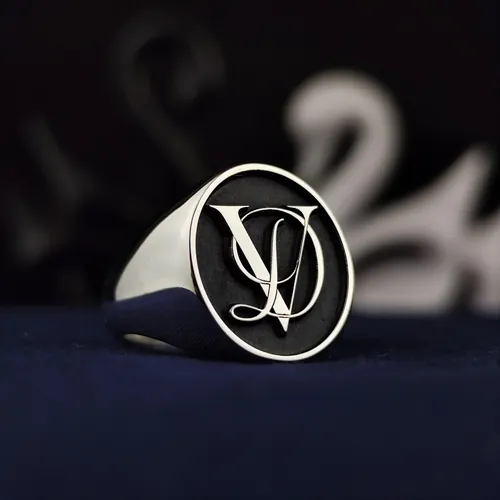
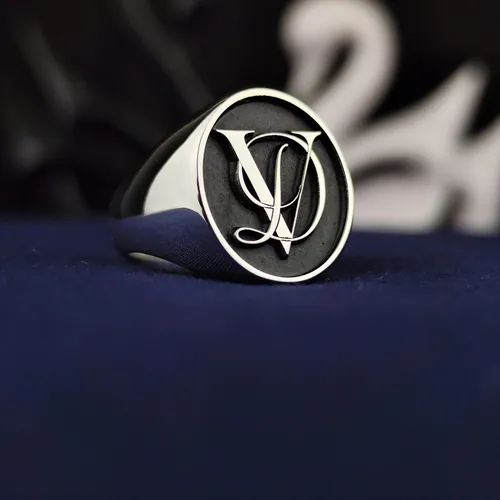
An oval face has a traditional, flowing appearance. It works well for vertically balanced emblems, initials and designs with a softer border.
Square or rectangular faces
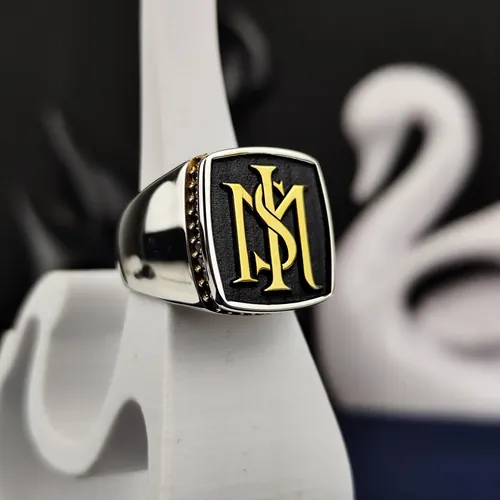
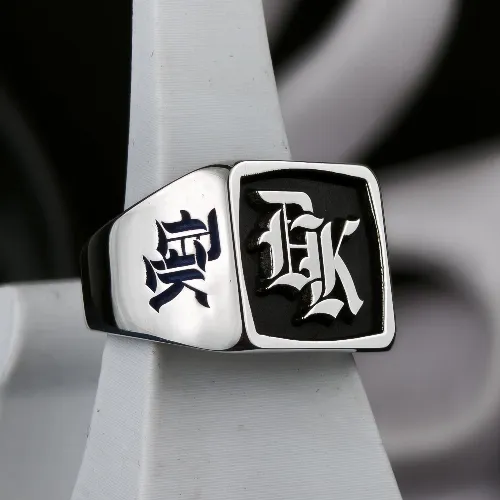
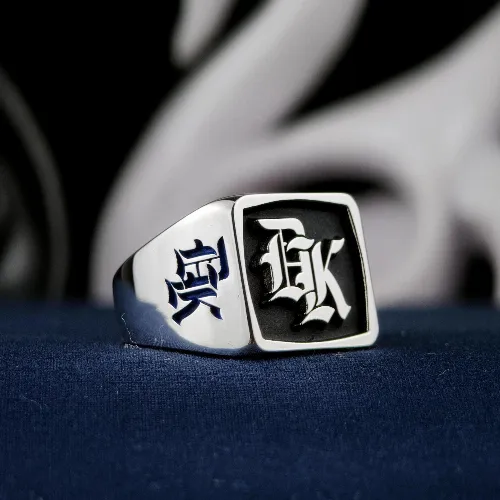
A square face gives a structured, architectural look and offers useful space for geometric artwork, numbers and lettering.
Cushion-shaped faces
A cushion shape sits between round and square. Its softened corners make it versatile for symbols that need visual strength without feeling severe.
The complexity of the artwork matters as much as the shape. Fine lines, small letters and layered symbols need enough surface area to remain legible after engraving. When a reference contains too much detail for the chosen ring, simplifying the design is usually better than shrinking every element.
3. Choose the right metal and finish
925 sterling silver
Sterling silver is a strong choice for a substantial personalised ring. It gives engraved lines good contrast, has the weight expected from a signet ring and can be polished again as it develops normal wear. Silver naturally tarnishes over time, but careful cleaning restores its brightness.
Gold-plated silver and vermeil
A gold finish offers the colour of gold at a lower initial cost than solid gold. Because a plated surface can wear gradually—especially on a ring worn every day—it should be kept away from harsh chemicals, repeated abrasion and unnecessary moisture.
Solid gold
Solid gold is suitable for an heirloom piece or frequent wear. It carries a higher price, but the colour is part of the metal rather than a surface coating. Available options and quotations depend on the design, size and current material requirements.
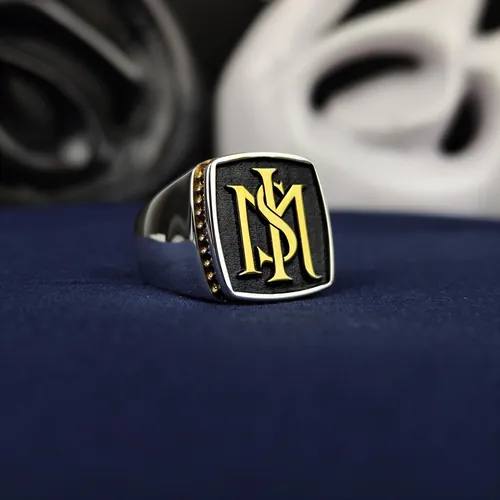
Darkened recesses or contrasting finishes can help a symbol stand out, while a bright polished face gives a cleaner look. The right choice is the one that supports the artwork rather than distracting from it.
4. Get the ring size right
Accurate sizing is essential for a ring with a broad face or wide band. Wider rings can feel tighter than slim bands in the same nominal size, and finger size may change slightly with temperature or time of day.
- Have the intended finger measured by a jeweller where possible.
- Measure a ring that already fits the same finger—not a different finger.
- Use the Swan Jewellry ring-size guide and confirm the sizing system before ordering.
- For a surprise gift, avoid guessing from height, weight or glove size; compare with an existing ring or ask someone close to the recipient.
If you are between sizes or selecting a particularly wide style, contact us before ordering so the band profile can be considered.
5. Supply artwork that can be engraved clearly
A sharp, front-facing reference gives the best starting point. Vector artwork is ideal, but a high-resolution image can also work if its lines are clear and the design is not distorted by perspective.
- Send the clearest file available.
- Type the exact letters, numbers and punctuation required.
- Explain which elements must remain unchanged.
- State the preferred placement of any inside-band engraving.
- Include examples of the finish or contrast you like.
Avoid screenshots with heavy compression, photographs taken at an angle and images in which fine details merge into shadows. If only a photograph is available, send the original file rather than a cropped social-media copy.
6. Review the digital design before production
For personalised work, Swan Jewellry prepares a digital design for approval before production. This is the moment to check spelling, numbers, orientation, proportions and the relationship between the emblem and the ring face.
The proof is a design guide rather than a perfect simulation of reflected metal. Engraved depth, hand finishing, light and the curvature of the ring may create small visual differences in the finished piece. Even so, approval greatly reduces avoidable mistakes and makes the intended composition clear before the ring is cut, engraved and finished by hand.
Do not approve a proof until every letter and number has been checked. A lodge number that looks correct at a glance can still contain a transposed digit. You can learn more on our personalisation process page.
7. Think about everyday wear and care
A signet ring is durable jewellery, but no finish is immune to wear. Remove it before weight training, manual work, swimming, cleaning with chemicals or any activity that may strike or deeply scratch the face.
Store the ring dry and separately from harder jewellery. Wipe it with a soft cloth after wear. Use cleaning products intended for the specific metal and finish; an abrasive silver cleaner that is appropriate for plain sterling silver may damage a plated or intentionally darkened surface.
A practical ordering checklist
- The intended finger and accurate ring size
- The face shape and approximate scale of the design
- The metal and finish
- The exact emblem, lodge number, initials or date
- Permission to use any protected or organisational mark
- The correct spelling and character order
- The delivery address and timing
- Approval of the digital design before production
Browse our custom Masonic rings for starting points. If your design is not shown, contact Swan Jewellry with your artwork and requirements.
Frequently asked questions
Can a lodge number or initials be added?
Yes, when the selected design has suitable space. A lodge number, initials, short date or brief inside-band inscription can often be incorporated. Exact placement is confirmed during the design stage.
Will I see the design before the ring is made?
For personalised work, a digital design is prepared for approval before production. Check all letters, numbers and design details carefully before approving it.
What is the best metal for a custom Masonic ring?
Sterling silver offers a substantial ring and clear engraving at an accessible price. Gold-finished silver provides a gold appearance but requires more care because the surface may wear over time. Solid gold is the premium option for an heirloom or frequent wear.
Can you work from my own emblem or artwork?
Often, yes. Send the clearest reference available and explain which elements must be preserved. The artwork may need to be simplified so that it remains legible at ring scale. You should also confirm that you have permission to use any protected emblem or organisational mark.
How long does a personalised ring take?
Current production is normally 1–2 business days after design approval, with shipping taking an additional 3–7 business days. Delivery estimates can vary by destination, customs processing and carrier conditions, so contact us before ordering if the ring is needed for a fixed date.
Can a Masonic ring be given as a gift?
Yes, but sizing and authorised use of the chosen emblem should be confirmed first. If the size is uncertain, obtain a measurement from a ring worn on the same finger rather than guessing.
Create a ring with personal meaning
A successful custom ring begins with a clear purpose, artwork suited to the available space and careful approval before production. Explore the Masonic ring collection, or send your reference artwork to discuss a made-to-order design with Burtay Eray Dinçel at Swan Jewellry.